Schedule your meetings now

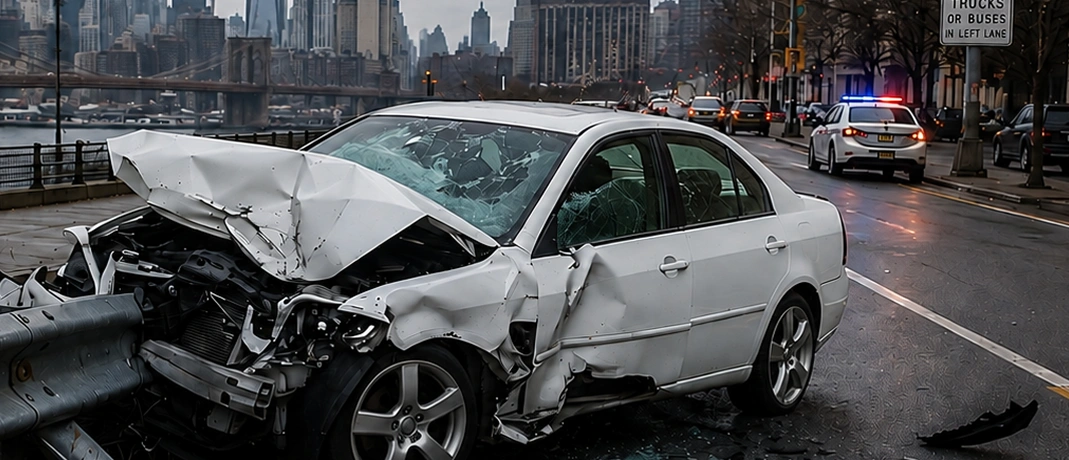

You are sitting at your kitchen table with a stack of paperwork: an insurance adjuster’s business card, a few medical bills that already arrived, and a claim number you are supposed to reference every time you call. Somewhere in the last few days, someone told you that you should probably talk to a lawyer, and now you are trying to figure out how to tell a good one from a firm that will treat your case like a file number. New York Auto Law built this practice to make that choice straightforward for people across Western New York.
What Should I Look for in a Buffalo Car Accident Lawyer?
Look for a firm that focuses specifically on motor vehicle cases, gives you direct access to the people handling your case, and works on a no-fee basis unless your case succeeds. A lawyer who checks all three of those boxes is positioned to give your case real attention rather than treating it as one of hundreds of unrelated injury claims moving through the same office.
What Should I Do Right After a Car Accident in Buffalo?
What happens in the hours and days after a crash can affect your claim, but a few practical steps also protect your health and your potential case at the same time, including:
- Calling 911 for a police response, so you have an official police report if it becomes evidence later;
- Getting medical attention right away, even if you feel fine at first, since some injuries do not show symptoms right away;
- Taking photos of the vehicles, the road conditions, and any visible injuries;
- Getting the other driver’s insurance information and contact details, along with contact information for any witnesses;
- Avoiding discussing fault at the scene, even to casually say you’re sorry with empathy, since anything you say can be used later; and
- Following up with your own doctor in the days after the crash, even if you were cleared at the scene.
If you were seriously hurt, unconscious, or too overwhelmed to do any of this, your case is not weakened because of it. A Buffalo car accident attorney can reconstruct much of what happened after the fact.
An accident reconstructionist can analyze the vehicles, the scene, and available data to determine how the crash occurred. Treating physicians and specialists can document your injuries and explain their long-term impact in terms that carry weight with an insurance company or a court. You are not required to have gathered everything yourself in the first hours after being hurt.
Why Are the Insurance Companies Being so Impatient?
In the days that follow, both your insurance company and the other driver’s will likely want a recorded statement, sometimes within days of the crash. They will call and leave you message after message until you respond. Keep in mind that the other driver’s insurer is not on your side. No matter how friendly the adjuster sounds, if they make you laugh, feel at ease, and say it’ll only take two minutes, don’t give them the recording they want.
Their questions are often designed to get you to say something that minimizes what they owe you. Speak with a lawyer before giving any recorded statement to the other driver’s insurance company, even if you are told it is just a formality.
What Types of Car Accident Cases Do You Handle?
New York Auto Law focuses exclusively on motor vehicle crashes, and different types of collisions raise different questions. Here is a brief look at the situations we handle across Buffalo and Western New York.
Rear-End Collisions
A driver who is following too closely, is distracted, or is slow to brake can cause a rear-end crash in seconds. These cases often involve whiplash, back injuries, and disputes over who had time to stop. Because rear-end crashes are common at stoplights and in stop-and-go traffic, insurance companies sometimes try to minimize them as minor fender benders, even when the impact caused a real, lasting injury. Early documentation from a doctor is often what separates a fairly compensated claim from a lowball offer.
T-Bone and Intersection Accidents
A driver who runs a red light, misjudges a turn, or fails to yield can cause a side-impact crash, one of the most dangerous types of collisions because of the limited protection on the sides of most vehicles. These crashes often occur at intersections with heavy cross traffic, and determining who had the right of way is usually central to the case. Traffic camera footage, if it exists, and witness accounts from other drivers at the intersection often become key evidence.
Head-On Collisions
A driver who crosses the center line or enters the wrong side of the road can cause a head-on crash, which frequently produces some of the most severe injuries seen in any accident. The combined speed of both vehicles at the moment of impact means these crashes often result in traumatic brain injuries (TBIs), spinal injuries, or worse. These cases often involve extensive medical evidence and long-term care planning from the very start.
Drunk and Impaired Driving Accidents
A driver who chooses to get behind the wheel after drinking or using drugs has broken the law before the crash ever happened, which can affect both the legal and financial outcome of a claim. These cases sometimes involve additional avenues for compensation beyond the driver alone, including claims against a bar or restaurant that continued serving a visibly intoxicated customer. A criminal case against the driver can move forward separately from, and does not need to conclude before, a civil claim for your injuries.
Pedestrian and Bicycle Accidents
Drivers who fail to yield, get distracted, or rush through intersections can seriously injure someone walking or riding a bike, who has far less protection than someone inside a vehicle. New York law places specific duties on drivers to watch for pedestrians and cyclists, even outside of marked crosswalks. These crashes often produce serious injuries precisely because there is no vehicle frame absorbing the impact.
Motorcycle Accidents
Motorcyclists face the same risks as other drivers, with far less physical protection, and crashes involving motorcycles often rest on unfair assumptions about the rider that do not hold up once the facts are examined. A driver who changes lanes without checking, follows too closely, or fails to see a motorcycle in traffic can cause devastating injuries in an instant. A fair evaluation of fault in these cases often starts with setting that bias aside and looking at what the evidence actually shows.
Commercial Truck Accidents
A crash involving a tractor-trailer or other commercial vehicle can involve multiple companies, driver logs, and electronic data, requiring a different kind of investigation than a crash between two passenger cars. Trucking companies are often required to maintain records that can reveal driver fatigue, maintenance issues, or company policies that contributed to the crash. Because more than one party may share responsibility, these cases frequently require identifying all potential sources of compensation early.
How Common Are Car Accidents in Western New York?
Car accidents are not a rare occurrence in Buffalo. City of Buffalo traffic incident data, sourced from Buffalo Police Department call records, shows that as of the beginning of September 2026, more than 6,700 incidents have been reported so far this year, with roughly 700 in the past month and more than 160 in the past week. Some intersections see these accidents far more than others. Calls involving the Scajaquada Expressway at Delaware Avenue, Hertel Avenue at Delaware Avenue, and multiple points along Bailey Avenue and the Kensington Expressway consistently rank among the highest in the city.
New York State data tells a similar story at a broader level. On average, three New Yorkers die every day in a traffic-related crash. Statewide, 74% of crash deaths happen in urban areas rather than rural ones, and pedestrians make up a notably higher share of New York’s traffic deaths than the national average. None of this is meant to alarm you. It is meant to show that if you were hurt in a crash in Buffalo, you are far from alone and that the roads here carry real, well-documented risks.
What Are the Questions Worth Asking Before You Hire a Buffalo Car Accident Lawyer?
Most people have never had to hire a lawyer before, and it can be difficult to know what actually separates a strong firm from an average one. Here are the questions worth asking any firm you are considering, along with how New York Auto Law answers them.
Does This Firm Handle Only Car Accidents, or a Wide Range of Cases?
Some firms handle car accidents alongside slip-and-falls, medical malpractice, and workers’ compensation claims, spreading their attention across many different areas of law. New York Auto Law focuses exclusively on car, truck, and motorcycle crashes. That focus means the people working on your case are not learning the rules of the road while also juggling other types of cases; motor vehicle law is the only thing this team does.
Will I Actually Speak with a Buffalo Car Accident Attorney, or Mostly with Staff?
At a high-volume firm, clients sometimes go months without speaking to the attorney handling their case, instead communicating with case managers or paralegals who may not have full authority to make decisions about the claim or even to discuss it. New York Auto Law gives you direct access to the team working on your file, with real updates about where your case stands rather than a rotating cast of unfamiliar voices. Ask any firm directly how often you will hear from your actual attorney, and how quickly they typically respond to questions.
What Does It Cost to Hire You?
A trustworthy car accident firm should be able to answer this clearly and immediately, without vague language or pressure to sign anything on the spot. New York Auto Law offers a free consultation and works on a no-fee basis unless your case succeeds. If a firm cannot explain its fee structure in plain terms during your first conversation, that is worth noticing.
How Long Has This Firm Been Handling Cases Like Mine?
Experience matters, particularly with insurance companies that negotiate injury claims every day and know which firms will push back and which will settle quickly. New York Auto Law brings decades of collective experience representing people injured in motor vehicle crashes and now specifically serves Buffalo and Western New York. A firm’s experience with your specific type of crash, whether a rear-end collision or a catastrophic truck accident, can meaningfully affect how your case is attended to.
Does New York’s No-Fault Insurance Cover My Car Accident?
Yes, in most cases. New York requires no-fault insurance to cover basic medical expenses and a portion of lost wages after a car accident, regardless of who caused the crash. This applies to drivers, passengers, and even pedestrians injured by a covered vehicle.
No-fault benefits have limits, though, and they are not designed to cover every cost of a serious injury. New York law defines a serious injury to include:
- Death;
- Dismemberment;
- Significant disfigurement;
- A fracture;
- Loss of a fetus;
- Permanent loss of use of a body organ, member, function, or system;
- Permanent consequential limitation of use of a body organ or member; or
- Significant limitation of the use of a body function or system.
If your injuries meet any of these categories, you may be able to pursue a claim against the at-fault driver directly for costs no-fault does not cover, including pain and suffering.
Who Is Liable After a Car Accident in Buffalo?
New York law generally requires every driver to exercise reasonable care, meaning the level of caution and attention a careful person would use under the same conditions. When a car accident lawyer in Buffalo, NY builds a case, that standard breaks down into what lawyers call “elements.” To be able to sue, you must meet each element in the law. For a claim against someone for negligence, which a car accident would be, you have to prove:
- Duty. Did the driver owe a duty to drive safely?
- Breach. Did the driver fail that duty through speeding, distraction, following too closely, or another form of carelessness?
- Causation. Did that failure actually cause the crash?
- Damages. Did the crash cause real, measurable harm, whether medical bills, lost income, or pain and suffering?
Here is what that looks like in practice. Say a driver runs a red light at an intersection on Delaware Avenue and strikes another car making a legal turn, leaving the other driver with a fractured wrist. Every driver owes a duty to obey traffic signals. Running the red light is a breach of that duty. Because the driver ran the red light and breached the duty, causation exists. The fractured wrist, the ER visit, and the time missed from work are the damages.
A case with a clear answer to all four questions is generally strong. A case where even one element is genuinely disputed, for example, if the light had just turned red and both drivers argue about timing, can turn into a much harder fight.
Evidence such as police reports, witness statements, photos of the scene, and vehicle damage helps answer these questions and establish what actually happened. In many cases, more than one driver bears some responsibility, which is where New York’s rules on shared fault come into play.
What If the Insurance Company Says I Was Partly at Fault?
New York follows a modified comparative fault rule for motor vehicle injury cases, which means if you are found to be 50% or less at fault for the crash, you can still recover compensation, reduced by your share of the blame. If you are found more than 50% at fault, the law prohibits recovery entirely.
Insurance companies are aware of this rule, which is exactly why they often look for reasons, sometimes weak ones, to argue that you share part of the blame. An adjuster might point to how fast you say you were driving, how far back you were from the car in front of you, or a single line in a witness statement suggesting you could have reacted sooner.
None of these arguments need to be strong to be effective; they only need to shift a few percentage points of blame onto you to reduce what the insurance company ultimately pays. Having a Buffalo car accident attorney who can push back on that argument with real evidence often makes a meaningful difference in what you ultimately recover.
How Long Do I Have to File a Car Accident Lawsuit in New York?
New York generally requires a personal injury lawsuit to be filed within three years of the date of the accident. Missing this deadline typically means losing the right to pursue your claim in court entirely, regardless of how strong the underlying case may be.
Three years can feel like plenty of time, especially in the days after a crash when medical care and recovery are the priority. But important evidence, including surveillance footage, witness memory, and vehicle damage, becomes harder to preserve the longer you wait, which is one reason to speak with a lawyer well before any deadline is close.
How Much Does It Cost to Hire a Car Accident Lawyer in Buffalo, NY?
Cost is often the biggest reason people delay calling a lawyer after a crash, and it should not be. Here’s how things work with New York Auto Law:
- Your initial consultation is free, with no obligation to move forward;
- You do not pay anything out of pocket to have your case reviewed and evaluated;
- We work on a contingency basis, meaning there is no fee unless we win your case; and
- If we take your case and do not recover compensation, you owe no attorney’s fee.
This structure exists so that cost is never the reason an injured person goes without legal help after a crash that was not their fault.
Why Talk to a Buffalo Car Crash Lawyer Even If You’ve Never Considered a Lawsuit Before?
Most people never picture themselves as someone who sues another person, and that instinct is understandable. But a car accident caused by someone else’s mistake can leave you with medical bills reaching into the thousands, or even hundreds of thousands, if surgery, ongoing treatment, or lost income are involved. Pursuing a claim in that situation isn’t about exacting revenge or even being angry with someone; it’s just a way to allow you to recover costs you never should have had to pay in the first place.
This is also why documenting your injuries early matters, even if they seem minor at first. An injury that looks like ordinary whiplash initially can turn out to be a TBI once fully evaluated. Seeking medical care and keeping a record of your symptoms early on protects you either way, whether your injury resolves quickly or requires more extensive care.
Why You Can Trust the Team Behind New York Auto Law
New York Auto Law was built around a simple idea: People hurt in motor vehicle crashes deserve a legal team that focuses on nothing else. This practice brings decades of collective experience representing people injured in car, truck, and motorcycle accidents, now extending that same focus to Buffalo and Western New York. Every case this team takes on involves a motor vehicle crash, never a slip-and-fall or a workers’ compensation claim handled alongside it.
That singular focus means the people reviewing your case already understand the specific evidence, insurance tactics, and legal issues involved in a car accident case, rather than learning them for the first time from your file. We are new to Western New York, and we built this practice so that families here have access to the same direct, focused representation available anywhere else in the state.
Talk to a Buffalo Car Accident Lawyer Today
You do not need to have all the answers before reaching out. New York Auto Law can review what happened, explain where you stand, and help you understand your options without any cost or obligation. Reach out today to schedule your free consultation and find out what your case may be worth.
Legal References Used to Inform This Page
To ensure the accuracy and clarity of this page, we referenced official legal and other resources during the content development process:
- City of Buffalo Open Data, Received Traffic Incident Calls.
- New York State Department of Health, Motor Vehicle Traffic Injuries by County of Crash and County of Residence.
- Institute for Highway Safety, Fatality Facts 2024: State by State.
- Definitions, N.Y. Ins. Law § 5102(d) and (j) (2026).
- Damages recoverable when contributory negligence or assumption of risk is established, N.Y. C.P.L.R. § 1411 (2026).
- Actions to be commenced within three years, N.Y. C.P.L.R. § 214 (2022).

Michael Greenspan has been deeply involved in the affairs of his community for his entire professional career. Mike has been a certified high school track and field official since 1992 and has officiated at prestigious invitational meets as well as the New York State Championships. Additionally, Mike has served as a member of the Executive Committee of the Glenn D. Loucks Games at his alma mater, White Plains High School since 1991 and as a member of the Board of Directors of the JCC-Rockland.